
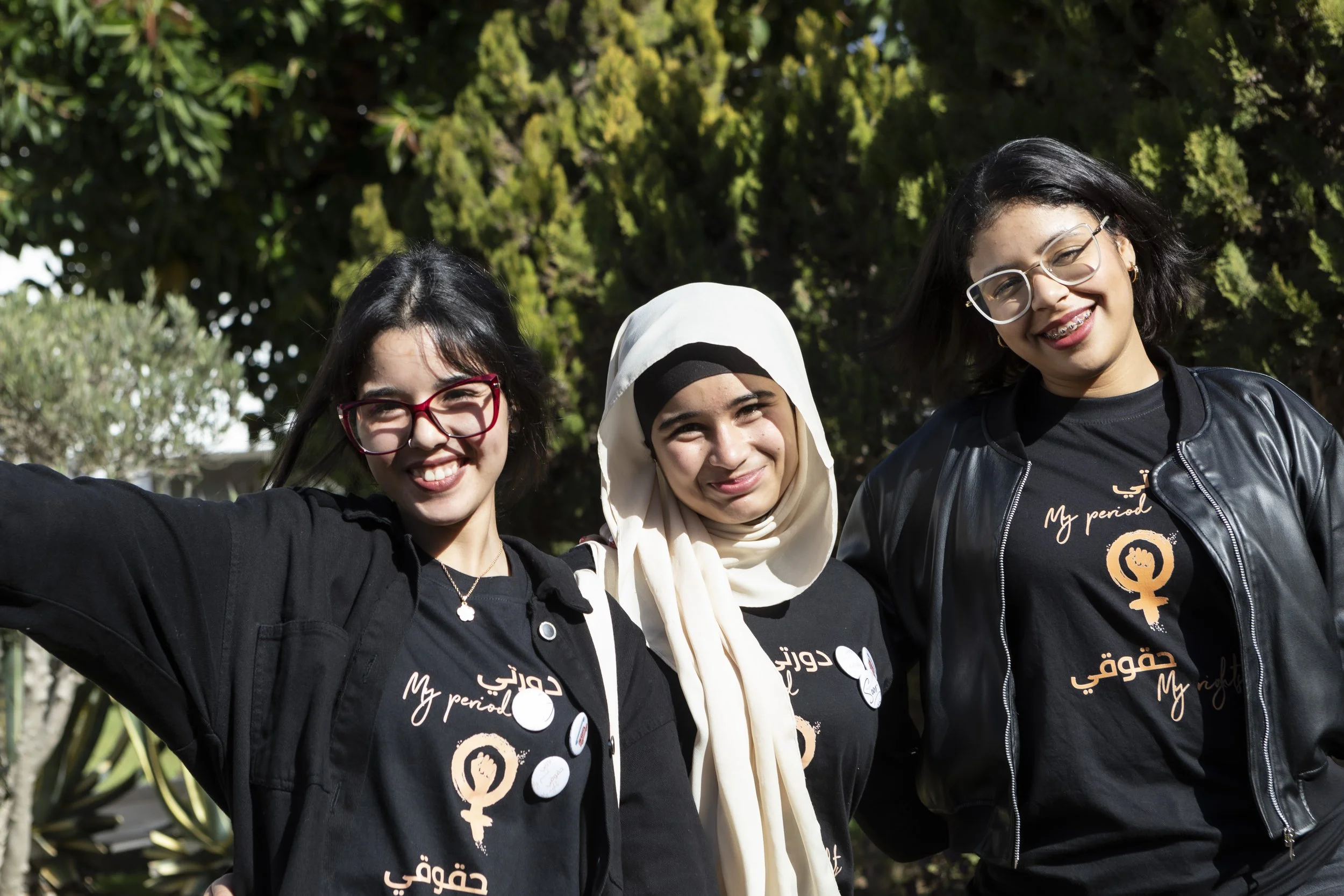
THE MOVEMENT TO
END PERIOD POVERTY
WHAT IS PERIOD POVERTY?
Period poverty refers to the inability to afford and access menstrual products, safe water and sanitation facilities, and menstrual education.
It is an economic, social, political & human rights issue that limits the lives, rights, and freedoms of millions of women and girls.
Menstruation is natural and healthy. Yet for hundreds of millions, it is a source of shame, poverty, danger, and lost opportunity.
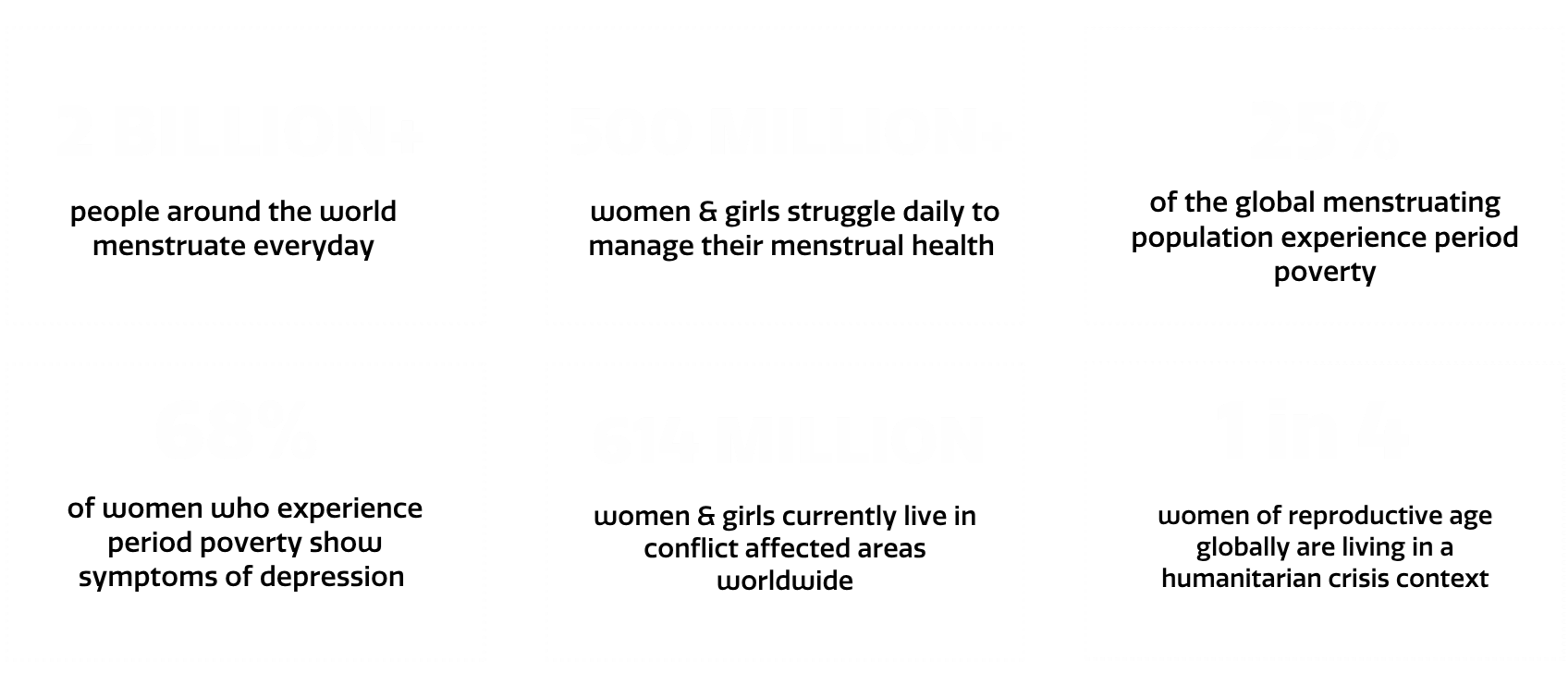
DID YOU KNOW?
DID YOU KNOW?
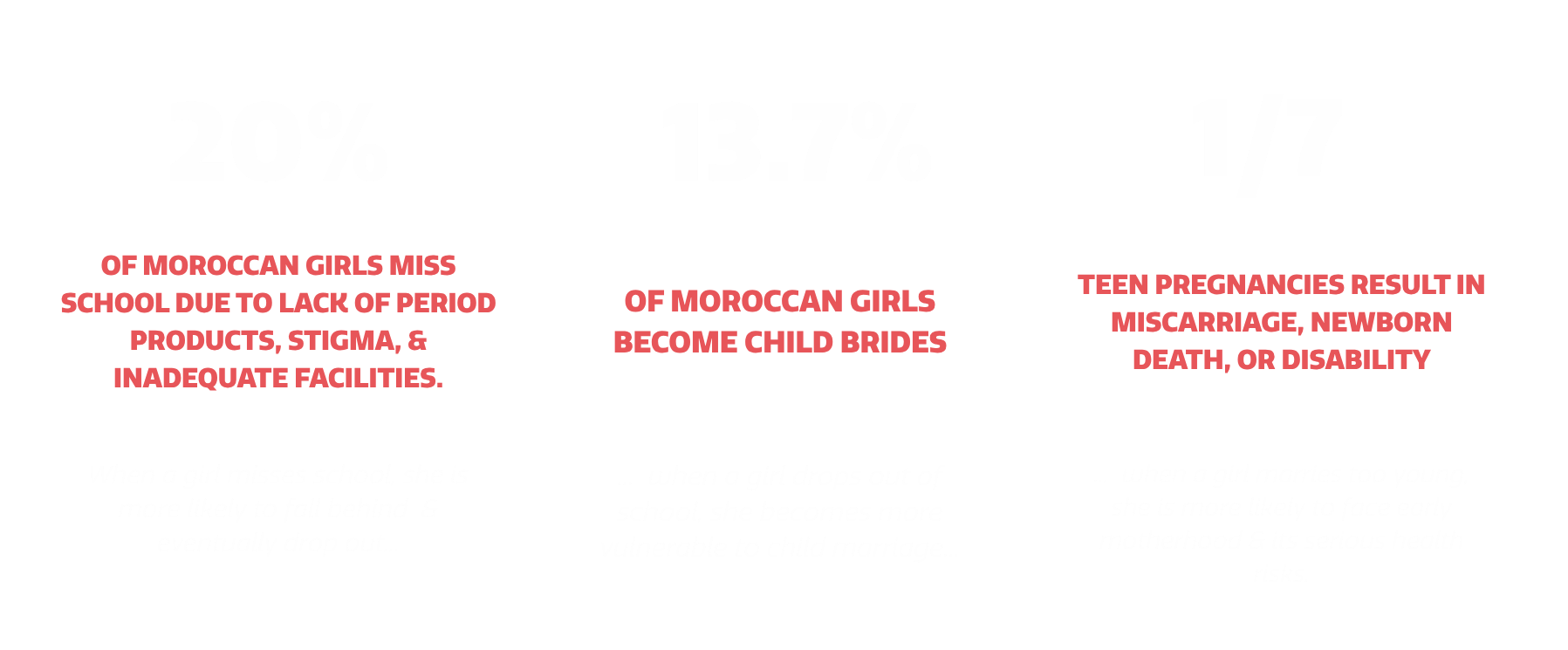
THIS CYCLE IS NOT INEVITABLE.
With the right products, education & support, girls can manage their periods safely — and stay in school.
WHAT WILL TAKE TO END PERIOD POVERTY?
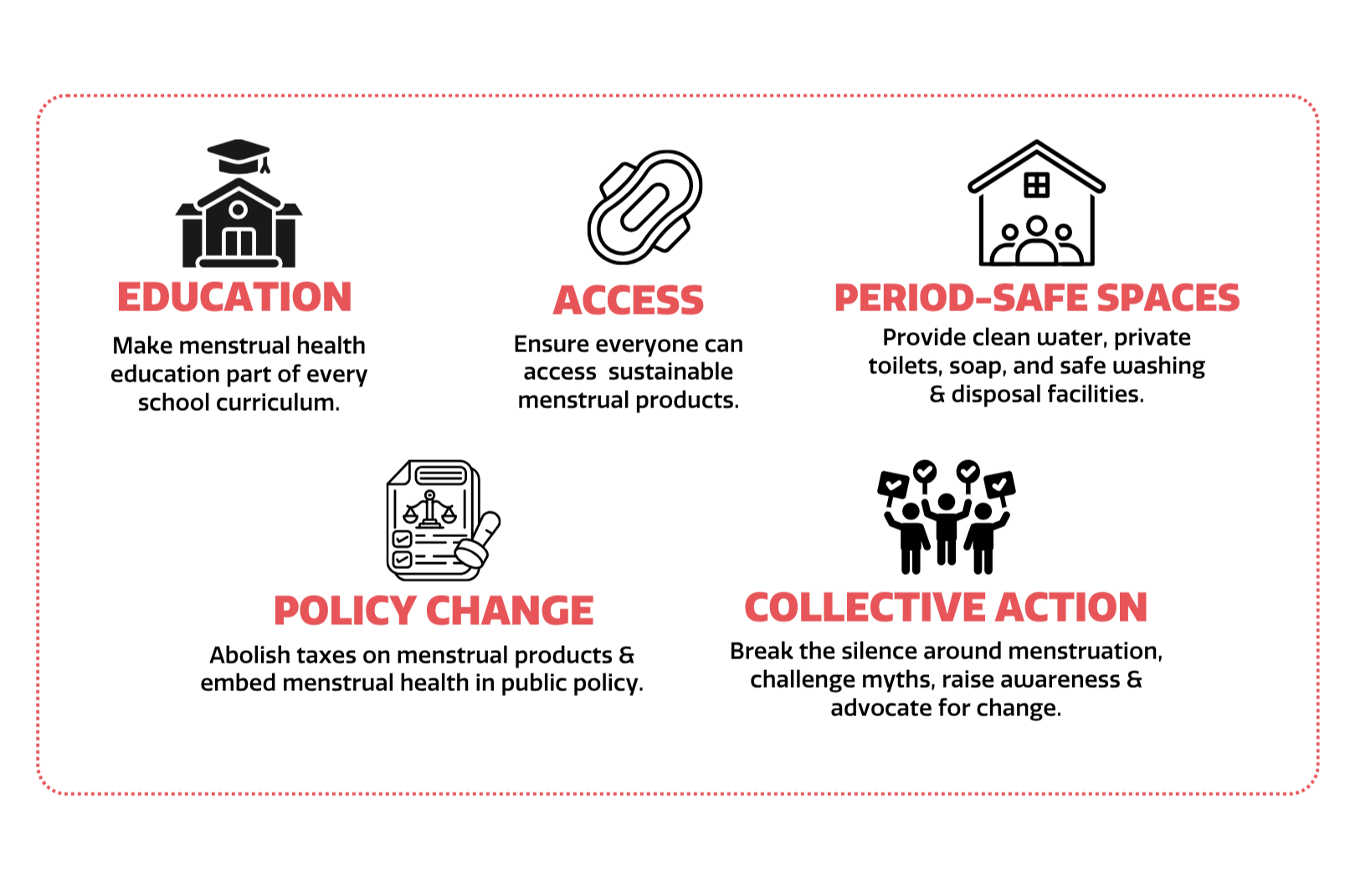
OUR SOLUTIONS
OUR SOLUTIONS
THE TALILI PERIOD KIT
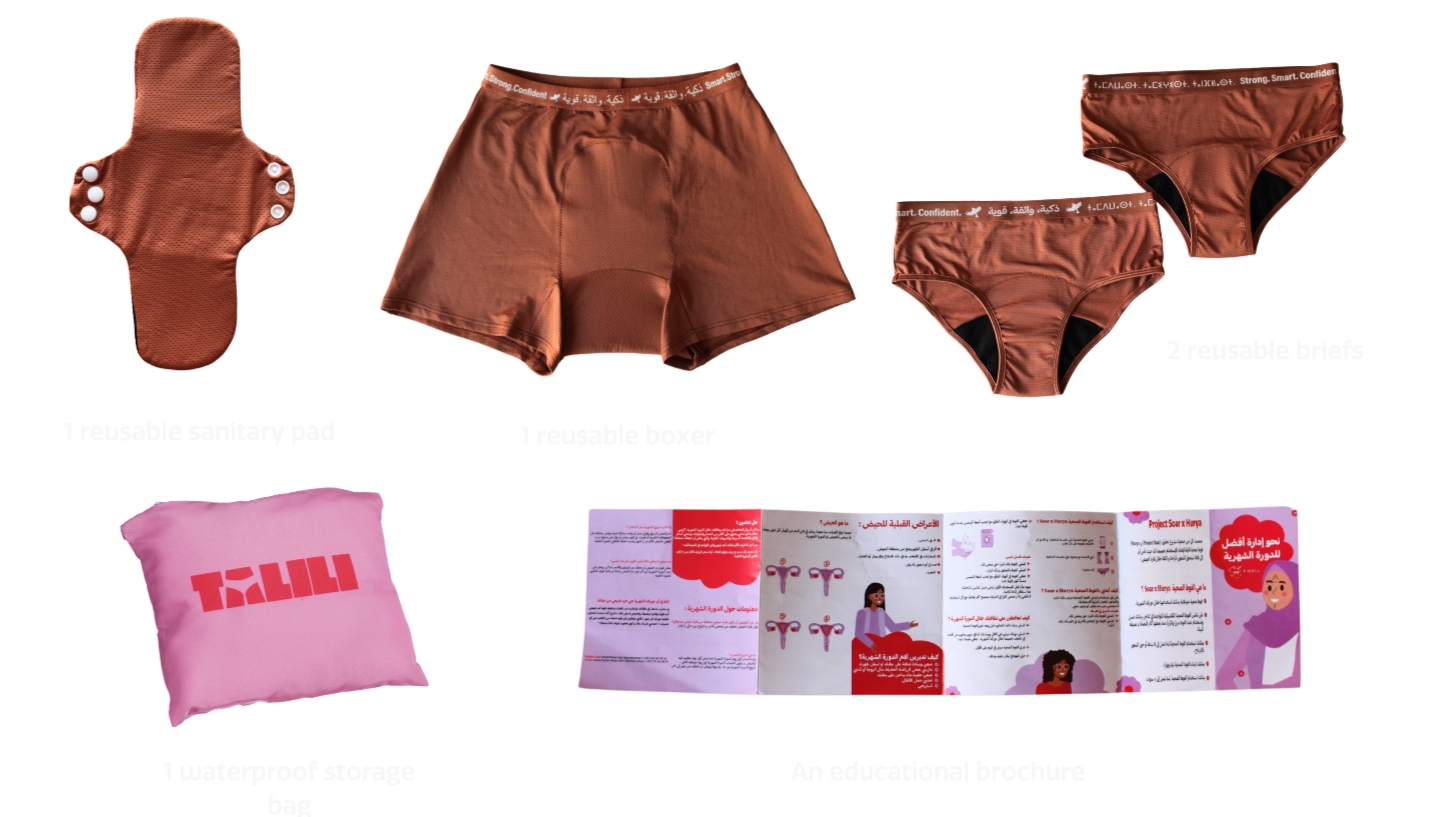
The Talili Period Kit is a practical and thoughtfully designed menstrual kit - combining high-performance protection, fast drying, affordability, and integrated education.
SOAR MENSTRUAL WORKSHOP
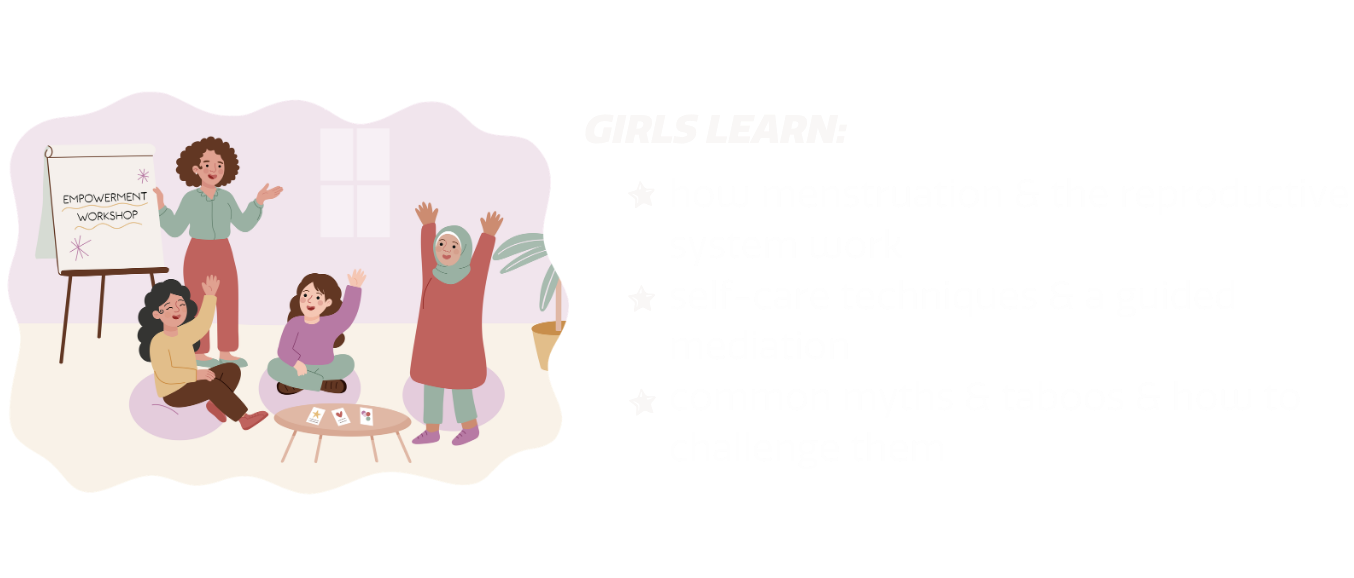
Our menstrual health workshop provides a safe space to empower girls to learn about their bodies & manage their periods with dignity. Our workshop curriculum is downloadable & available to NGOs, schools & other partners.
SOAR PERIOD STORYBOOK

When the Moon Reaches the Mountain is Project Soar’s period storybook - the first of its kind written in Arabic. Designed as a fun storytelling tool for menstrual education, it follows the story of a Moroccan girl navigating puberty & her first period.
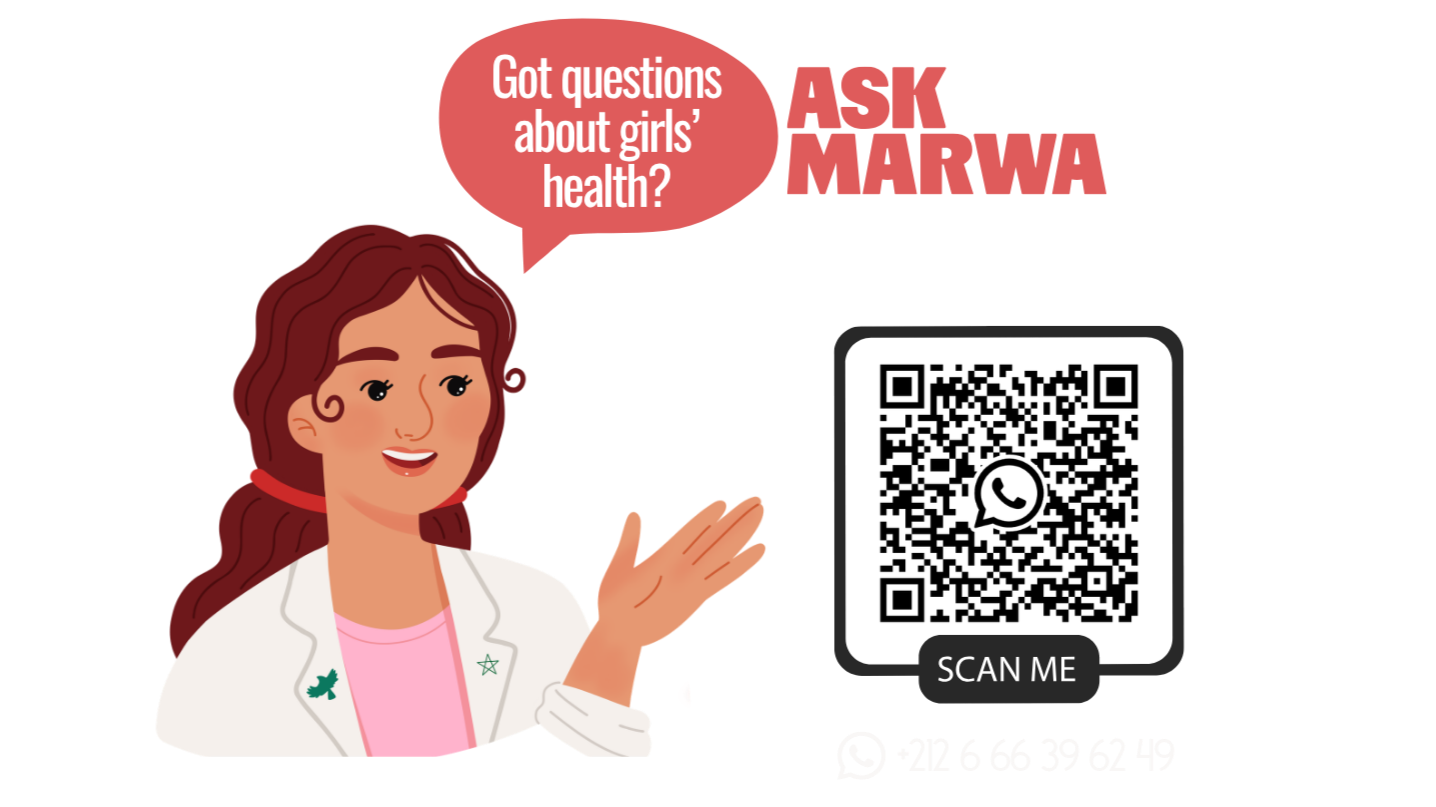
ASK MARWA
Ask Marwa is a pioneering AI WhatsApp chatbot created to provide girls & women with medically accurate & culturally sensitive information on sexual & reproductive health & rights 24/7.
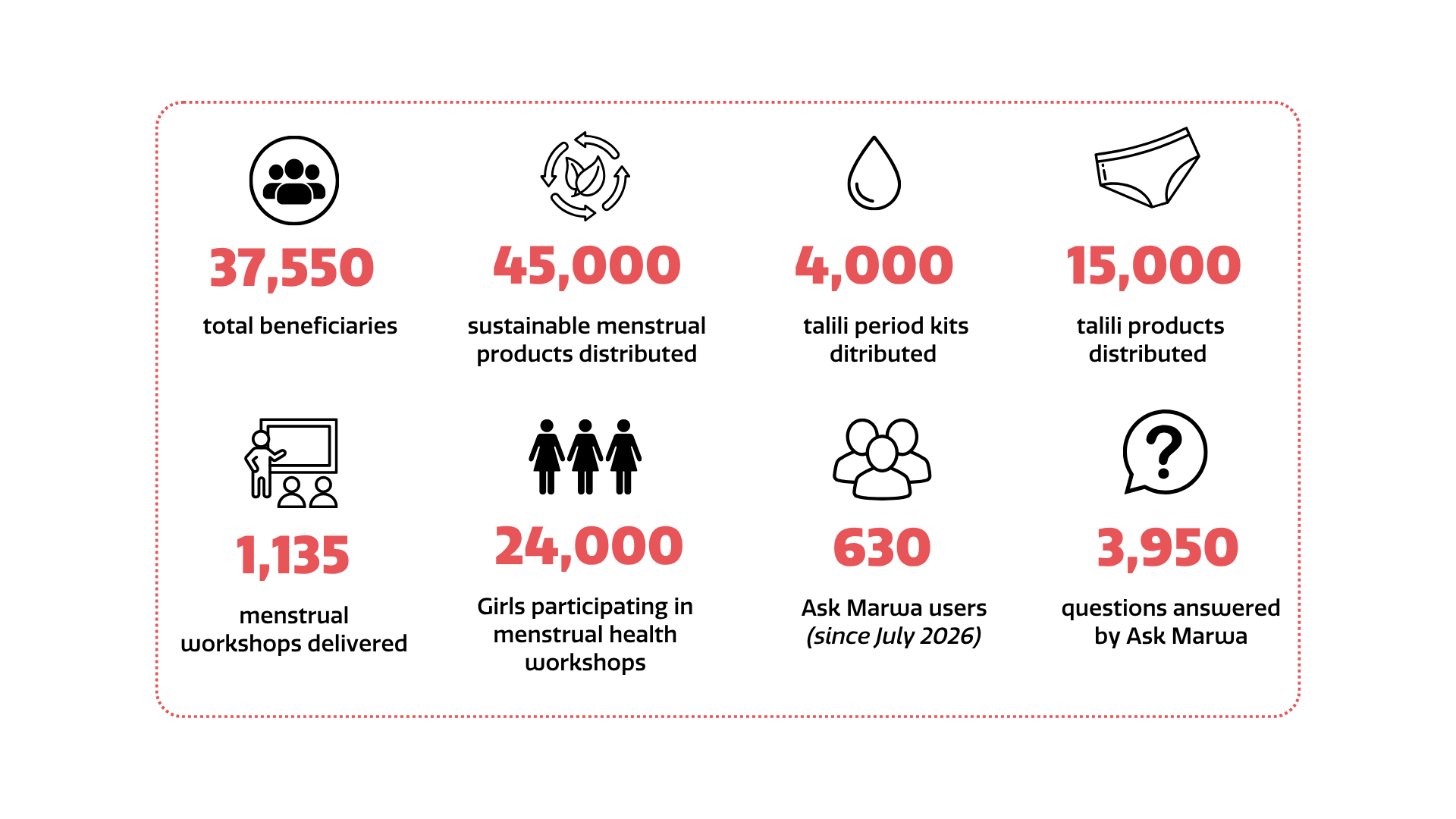
OUR IMPACT
AT PROJECT SOAR, WE ARE BUILDING A MOVEMENT TO END PERIOD POVERTY.
A movement to ensure that no girl ever has to choose between her period & her future.
A movement to end the stigma that has silenced & held back girls & women for generations.
A movement to create lasting change - for gender justice, climate justice & economic justice.
SO MANY MISSED DAYS
a story poem on period poverty, by Maryam Montague
She was 11 the first time, and no one had told her.
In Bangladesh, only 32% of girls knew what was coming before it came. In Egypt, 66% didn’t either.
Not knowing is one thing. Not having enough is another — a quarter of everyone who bleeds each month doesn’t have enough to manage it, her own body like a stranger who broke in without knocking.
She thought she was dying. She was only becoming what 2 billion people become.
She didn’t tell her mother for 3 days. She used what she had — a folded rag, the way girls with no other option use rags, newspaper, leaves, whatever the hand finds when the shelf is empty and the coin isn’t there.
She missed school that week. By the time she was 14, she had missed 60 days a year — the same math that turns 20% of the school year into something the attendance sheet just calls absent, never why.
So many missed days, and not one of them was ever about school at all.
She is one of 4 in 10 Indian girls who stop coming to school on the day it starts. She is the 1 in 5 who never comes back.
At 16, she got a job instead — in a country where a box of what she needed cost 3 months of what she earned, so she went without, and improvised, because that felt easier than the shame of asking.
She is not lazy. She is not failing. She is standing right where a system decided it was cheaper not to look — in the space between her body and what the world was willing to pay for it.
Somewhere in that decade, a war found her country, or a flood did, or both. 90% of the water system, gone, the way it went in Gaza.
She packed what she could into a bag — the way 700,000 girls and women did in Gaza, the way 5.8 million did in Sudan — and kept walking, and kept bleeding, because the war did not know it was supposed to wait for her.
Someone handed her a kit at the border — a pack of pads, soap, a flashlight, a whistle. It was not enough. It was also everything, that day.
By 19, she had learned the math no one taught her in school: missed days become missed grades, missed grades become a missed diploma, a missed diploma becomes the job she didn’t get, becomes the wage she never earned, becomes her daughter, one day, starting the same story, reaching for the same rag.
The math just never mathed in her favor.
68% of women like her live with depression, uninvited, right on schedule.
But here is where the story bends.
Somewhere, a country made the products free. Somewhere, a period tax was dropped. Somewhere, a teacher kept a drawer stocked. Somewhere, aid workers packed 100,000 pads for girls they’d never meet.
She’s grown now. She still bleeds every month, the way she always has, but somewhere along the way, someone decided her body was not something to apologize for.
She tells her daughter early. She keeps a drawer filled too. She says period out loud, and the room does not fall silent.
The tide came in, the way it always does. This time, someone was ready for it.
That is the whole story. It has been the same story 500 million times. It does not have to end the same way 500 million and one.